.webp)

Most businesses have a website. Very few have a system that actually works for them.
If your website displays your services, has a contact form, and maybe a photo or two, it is doing the absolute minimum. That was enough in 2012. Today, your visitors expect instant responses, personalized experiences, and zero friction. And your competitors are already delivering that.
But here is what most people get wrong when they start thinking about upgrading their online presence. They think it means adding a chatbot to an existing site, or connecting a booking tool, or plugging in some automation here and there. That is not an upgrade. That is just a regular website with a few tools bolted on top of each other, and it creates more chaos than it solves.
What your business actually needs is a fully connected system. One where your website, your AI tools, your CRM, your automations, your communication channels, and your marketing all work together as one unit. Every part feeds into the next. Nothing operates in isolation.
In this post, we are going to break down exactly what that looks like, why it matters for your business, and what changes when everything is properly connected.
Why a Basic Website Is No Longer Enough
Think about what happens when someone visits a typical business website today. They land on the homepage, read a bit, maybe scroll through the services page, and then they hit a wall. There is a contact form. Maybe a phone number. And then silence.
That visitor has to do all the work. They have to decide to reach out. They have to wait for a reply. They have to remember to follow up if no one responds. And if they do not feel like doing all that, they leave. They go to the next result on Google and start over with someone else.
This is the core problem with static or basic websites. They are passive. They wait. And in a world where attention lasts a few seconds, waiting is the same as losing.
Research consistently shows that businesses responding to a lead within the first few minutes are dramatically more likely to convert than those who respond hours later. A basic website cannot respond in minutes. A properly connected system can respond instantly, at any hour, on any day.
But speed is only part of the issue. The bigger problem is disconnection. Most businesses are running five, six, or even ten separate tools that do not talk to each other. You have your website on one platform, your email marketing on another, your CRM in a spreadsheet, your reviews scattered across Google and Facebook, your bookings handled manually, and your social media managed from yet another app.
Every tool works on its own. And you spend half your day moving information between them, chasing leads, and trying to keep track of where everything stands. That is not a system. That is a pile of tools dressed up as one.
What a Fully Connected Website System Actually Is
A fully connected website system is built around one central idea: every part of your digital presence should be integrated, automated where it makes sense, and working toward the same goal, which is turning strangers into customers and customers into loyal fans.
It is not a single product you install. It is a set of services that are designed, built, and integrated together so they function as one cohesive unit. The website is the front door. But behind that front door is an entire infrastructure that handles communication, lead management, follow-ups, reputation, scheduling, marketing, and more.
Think of it like a high-performing restaurant. The dining room is what guests see. But what makes the restaurant actually run is everything behind the scenes: the kitchen, the inventory system, the reservation tool, the staff communication, the supplier relationships. Remove any one of those, and the whole experience falls apart. Your website works the same way. What visitors see is just the beginning. What runs behind it is what makes the business grow.
Here are the six core pillars that make up a complete, connected website system.
The 6 Pillars of a Connected Website System
1. Website and Funnels: Your Digital Foundation
The website is where everything starts, but in a connected system, it does much more than display information. It is actively designed to guide visitors through a journey.
This means clear messaging that speaks directly to your ideal customer, landing pages built to convert, and sales funnels that capture interest before it disappears. A funnel is not a separate thing from your website. In a connected system, they are the same infrastructure. When someone clicks on an ad, fills out a form, or books a call, that action immediately triggers the next step in the system.
The website and funnels are the entry point. They are what Google finds, what your visitor sees first, and what starts the entire customer journey. Getting this right is the foundation everything else is built on.
2. AI Chatbot and Voice Assistant: Always-On Communication

Once a visitor lands on your site, the next critical moment is whether they feel welcomed and helped, or whether they feel ignored.
An AI chatbot handles that moment. It greets visitors, answers common questions about your services, pricing, and availability, and guides people toward the next step, whether that is booking a call, filling out a form, or getting a specific answer they need. It does this at midnight just as well as it does it at noon.
The AI voice assistant takes this further by handling incoming phone calls. Instead of a missed call going to voicemail and likely never being returned, the voice assistant picks up, engages the caller, gathers information, and either books them directly or passes the details through to you.
These are not just convenience features. They are revenue protection tools. Every unanswered question, every missed call, and every slow reply is a potential customer who chose someone else instead.
And because everything is connected, the conversations handled by the chatbot and voice assistant do not disappear. They feed directly into your CRM, trigger the right automations, and become part of the lead's full history in your system.
3. CRM and Pipeline: Know Exactly Where Every Lead Stands
A CRM, or customer relationship management system, is the memory of your business. It knows who has contacted you, what they asked about, where they are in the buying process, and what needs to happen next.
Without a CRM, leads fall through the cracks. You forget to follow up. You lose track of who was interested three weeks ago. You have no clear picture of how many potential customers you actually have at any given moment.
In a properly built system, the CRM is not something you update manually. It is fed automatically. When someone fills out a form on your website, they appear in the CRM. When the chatbot qualifies a lead, those details go straight in. When someone books an appointment, it shows up in the pipeline. Everything updates itself as people move through stages, so you always have full visibility without having to maintain it by hand.
This is the difference between running your business on gut feeling and running it with actual clarity.
4. Automations and Follow-Ups: Your Business Runs While You Focus Elsewhere
Automation is what turns a connected website from impressive to genuinely powerful. It removes the repetitive, manual work that eats up your time every single day.
When a new lead comes in, an automation sends them a welcome message. When someone books an appointment, an automation sends a confirmation and a reminder the day before. When a service is completed, an automation follows up to ask for a review. When a lead goes cold, an automation sends a re-engagement message after a set number of days.
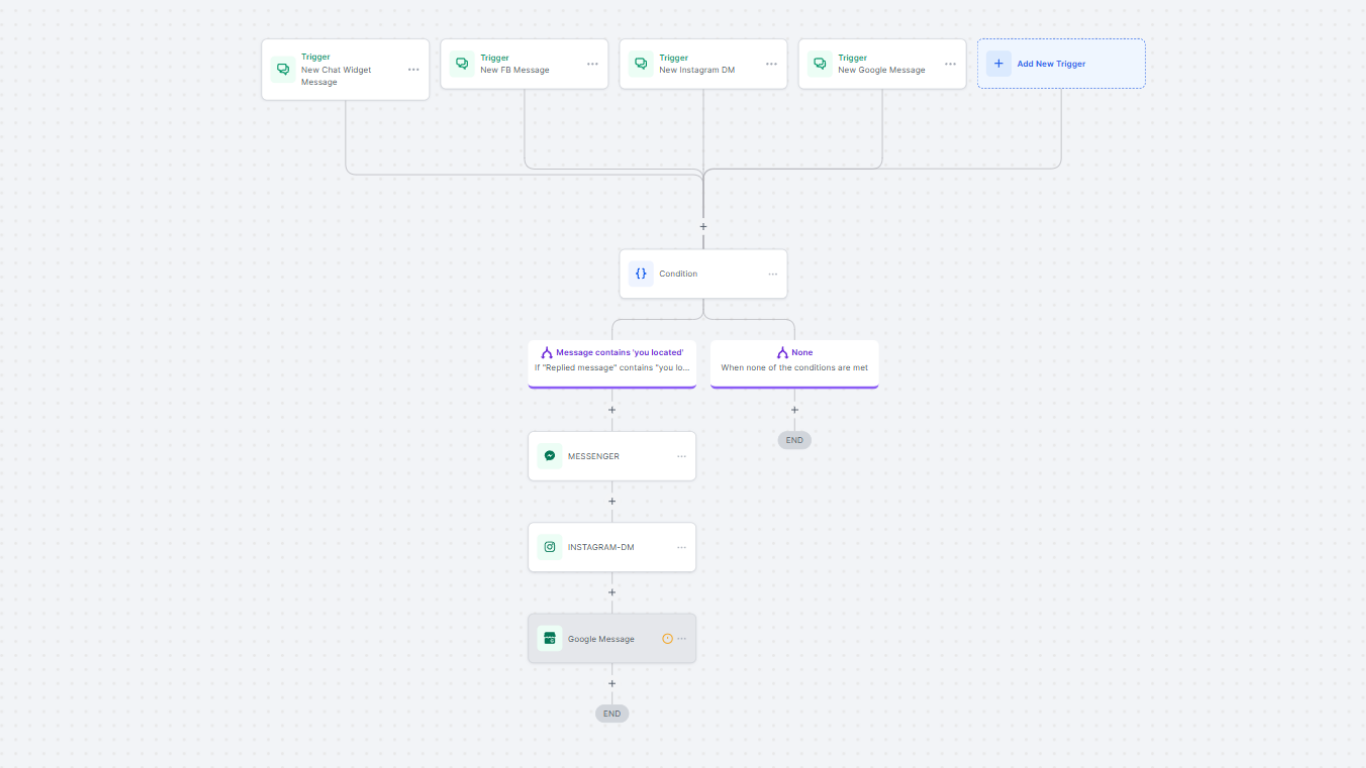
None of this requires you to be at your desk. None of it requires you to remember. The system does it consistently, every time, without fail.
• Email sequences that nurture leads over days or weeks
• SMS reminders that reduce appointment no-shows
• Missed call text backs that keep the conversation alive
• Re-engagement flows for leads that went quiet
• Post-service follow-ups that generate reviews and repeat business
Each of these automations is useful on its own. But connected to the rest of the system, they become something more. They become a full customer journey that runs automatically from the first visit to the final purchase and beyond.
5. Unified Inbox, Reviews, and Booking: No More Juggling Platforms
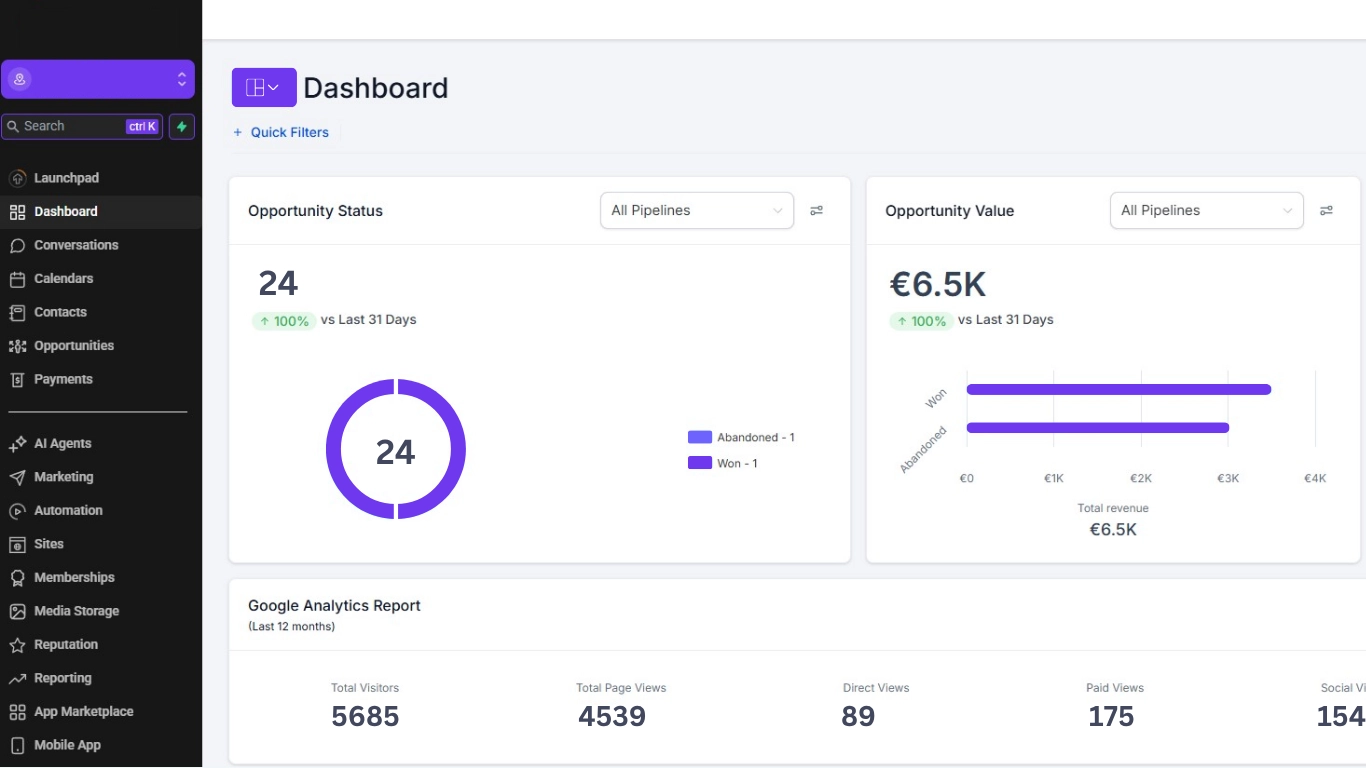
One of the biggest time drains for any business is managing communication across too many places at once. Messages come in through email, Instagram, Facebook, Google, SMS, and live chat. Reviews appear on Google, Facebook, and other directories. Booking requests arrive through different channels at different times.
A connected system brings all of this into one place. One inbox where every message from every channel appears together. One dashboard where you can see and respond to all your reviews. One booking setup that connects directly to your calendar and sends automatic confirmations.
This is not just about convenience. It is about response time and consistency. When everything is in one place, you respond faster, you miss fewer messages, and your customer experience feels professional and organized, because it actually is.
Reviews deserve special attention here. They are one of the most powerful trust signals your business has online. When review requests go out automatically after every completed service, your reputation grows steadily without you having to think about it. More reviews, better visibility, more trust from new visitors.
And the best part is that none of this requires you to be tied to a desk. Everything we just described, your inbox, your leads, your reviews, your appointments, your pipeline, is accessible from both the web platform and a dedicated mobile app. Whether you are at the office, at a client meeting, or on the go, you have full visibility and control over your entire business from your phone. You never miss an update, you never lose track of a lead, and you never feel out of touch with what is happening. Your business runs with you, wherever you are.
6. Social Media, Email Campaigns, and Paid Advertising: Staying Visible and Driving Growth
Attracting a visitor to your website once is not enough. A well-built system keeps your business visible between visits, nurturing relationships until someone is ready to buy.
Social media planning tools let you schedule and publish content across multiple platforms from a single place, so you maintain a consistent presence without spending hours every week switching between apps. Email campaigns let you stay in touch with your audience, share updates, promote services, and bring past customers back.
The key difference in a connected system is that your social media and email tools are tied to your CRM and automations. That means you can send targeted campaigns to specific segments of your audience, track who opened what, and trigger follow-up actions based on how people engage. It is not broadcast marketing. It is relevant communication that feels personal even when it is automated.
And for businesses that want to accelerate growth through paid advertising, the system goes even further. You can plan, launch, and manage Google Ads, Meta Ads, and LinkedIn Ads all from the same place, without logging into separate ad accounts or switching between tools. Your campaigns are directly connected to your CRM, your funnels, and your automations. That means a lead generated by a Google Ad lands in your pipeline instantly, triggers a follow-up sequence automatically, and is tracked all the way through to conversion.
This is what separates a connected system from running ads the traditional way. Most businesses pay for clicks that disappear into a website with no follow-up infrastructure behind it. When every part is connected, every click is captured, nurtured, and followed up with automatically. Your ad spend works harder because the system behind it is built to convert.
7. Works Seamlessly With the Tools You Already Use
One of the most common concerns businesses have when switching to a new system is losing the tools they already rely on. The good news is that our platform is built to connect, not replace. You do not have to abandon what already works for you. Instead, everything plugs into the same connected infrastructure we build for your business.
Whether your team manages projects in ClickUp or Notion, communicates in Slack, handles finances in QuickBooks, runs an online store on Shopify, takes payments through Stripe, talks to clients over WhatsApp, hosts meetings on Zoom, or organizes everything inside Google Workspace, our platform supports all of it. And for anything beyond the native integrations, Zapier bridges the gap, connecting thousands of additional tools so your entire workflow stays in sync.
This matters more than most people realize. A connected system is only as powerful as the data flowing through it. When your project management, communication, payments, and customer data all feed into the same infrastructure, you get a complete picture of your business without manually copying information between apps. Decisions become faster, errors become fewer, and your team spends less time on admin and more time on actual work.
You do not start from scratch. You start from where you already are, and we connect everything around it.
What Changes When Everything Is Connected
Understanding each pillar individually is useful. But the real value comes from what happens when they all work together.
Here is a realistic example. A potential customer finds your business on Google, lands on your website, and starts chatting with your AI chatbot at 9pm. The chatbot answers their questions, qualifies their interest, and books them for a call the next morning. That lead is automatically added to your CRM, tagged correctly, and a confirmation email goes out immediately. The next morning, before you even open your laptop, you have a booked call waiting with full context on who the person is and what they need.
That entire sequence happened without you doing a single thing manually. And it happened because each part of the system was connected to the next.
A connected system does not just save you time. It closes the gaps where leads used to disappear. Every touchpoint is covered, every follow-up is handled, and every opportunity has the best possible chance of converting.
Compare that to the typical experience: a visitor comes to a basic website late at night, finds no one to talk to, fills out a contact form, and waits. The next morning you see the inquiry, write a reply, and hope they are still interested. By then, they have already spoken to someone else who responded instantly.
The difference is not about effort. It is about infrastructure.
Who Needs This Kind of System?
The honest answer is any business that wants to grow without simply working more hours.
If you are a service business that relies on bookings, consultations, or ongoing client relationships, a smart system directly protects and grows your revenue. If you are a local business trying to stand out against larger competitors, the responsiveness and professionalism of having everything integrated levels the playing field. If you are scaling and cannot afford to hire staff for every administrative task, automation fills the gaps.
You need this if any of these sound familiar:
• You miss calls or reply to inquiries too slowly
• You spend too much time on repetitive tasks like follow-ups and confirmations
• You lose track of leads and do not have clear visibility into your pipeline
• Your reviews are not growing consistently
• You are managing five or more separate tools that do not talk to each other
• You want to grow your business without increasing your workload
You do not need to be a large company to benefit from this. In fact, smaller businesses often see the biggest impact because a connected system handles work that would otherwise require hiring additional people.
How Engridded Sets It All Up For You
At Engridded Agency, we do not just build websites. We design, build, and connect the entire system around your business.
Our process is straightforward. We start with a call to understand your business, your goals, and where you are currently losing leads or wasting time. From there, we handle the full setup: your website, your CRM, your automations, your communication tools, and your integrations, all customized to how you actually work. Once everything is live and connected, you can manage it all from one place, whether you are at your desk or on your phone.
We do not disappear after launch. Our team stays with you for ongoing support, updates, and as your business grows, more advanced marketing services to keep scaling.
The result is a digital presence that is not just good-looking but genuinely functional, one that works for your business around the clock, captures every lead, and follows up without you having to think about it.
If you are ready to move from a basic website to a system that actually drives growth, we would love to show you what that looks like for your specific business.
Book a free call with Engridded Agency at engridded.com
FAQ