To get your business recommended by ChatGPT, Claude, and Gemini, you need to be the business that AI platforms trust most in your category. That trust is built through five things: consistent business information across every directory and platform, a technically structured website that AI can read and interpret accurately, a strong volume of recent reviews across multiple platforms, authoritative third-party coverage of your business from sources the AI already trusts, and content that answers the specific questions your customers are asking AI instead of Google.
That is it. Everything else is the detail behind each of those five, because the gap between knowing what to do and doing it correctly is where most businesses fall short.
The scale of the opportunity is significant and largely untapped. As many as 45 percent of consumers used AI tools to find local businesses in the past year, up from just 6 percent the year before (According to BrightLocal's 2026 Local Consumer Review Survey). That is a sevenfold jump in twelve months, making AI the third most-used business discovery channel behind only Google and Facebook. And yet, (according to SOCi's 2026 Local Visibility Index, which analyzed over 350,000 business locations) only 1.2 percent of local businesses are ever recommended by AI search. The businesses that get this right now are building an advantage that will compound for years.
Why Most Businesses Are Invisible to AI Platforms
The instinctive assumption most business owners make is that getting recommended by AI is about being well-known or having good reviews. Both help. But a 2026 study testing local AI recommendations across 304 neighborhoods found something that challenges that assumption in an important way.
Researchers tested AI recommendation behavior in two phases. In the first, they asked AI models to recommend local businesses normally. The models invented businesses that did not exist and overlooked large numbers of real ones. In the second phase, they gave the AI a complete, verified list of 100 real businesses in each area and asked it to choose 10. The AI had every business name in front of it. No guessing required.
Even with a complete verified list of available businesses, 47.5 percent of real businesses were still never recommended. Nearly one-third of those ignored businesses were overlooked by all three AI models tested. Getting into the database is not enough. AI needs a reason to move your business from the available options into the actual recommendation.
That reason comes from trust signals. AI platforms make recommendations the same way a well-informed person would: by defaulting to the businesses that have the most consistent, verifiable, and credible information behind them. A business with accurate information everywhere, strong recent reviews, mentions in credible third-party sources, and a website that communicates clearly what it does and who it serves is the business AI defaults to. Everything else is invisible by comparison.
There is also a factor that most guides on this topic skip entirely. Each AI platform sources its information differently. A strategy that works for Gemini may leave you invisible on ChatGPT. Understanding how each platform actually works is the starting point for building visibility across all of them.
How Each Platform Sources Its Recommendations
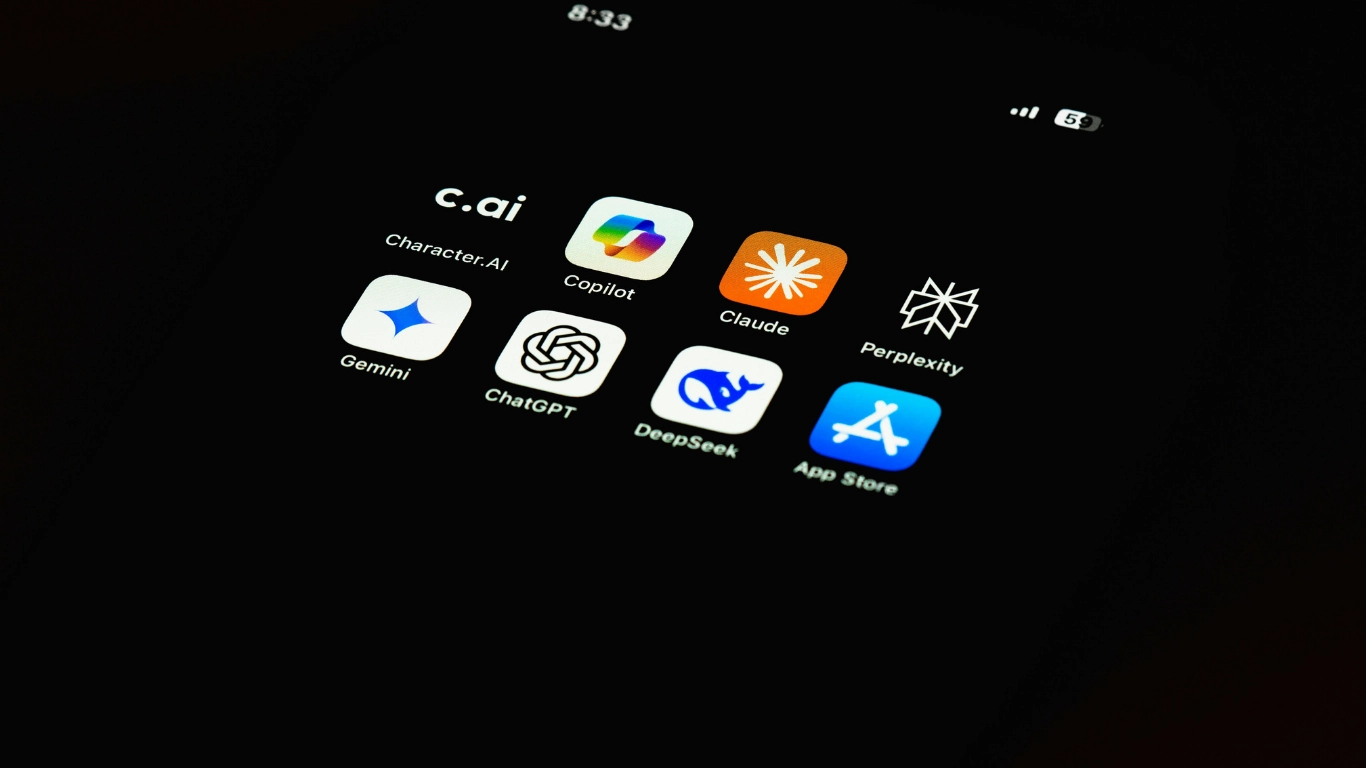
ChatGPT: Bing-native and directory-driven
ChatGPT retrieves information primarily from Bing's index rather than Google's. This is a critical distinction that most businesses overlook. When ChatGPT performs a web search to answer a local business query, it is pulling from what Bing has crawled and indexed, which includes Bing Places listings, business websites, directories, and other publicly accessible sources.
Nearly half of ChatGPT's citations come from third-party directory listings, including Yelp, Foursquare, and TripAdvisor, not from business websites directly (According to Yext's analysis of 6.8 million AI citations). This means that for ChatGPT visibility, your priority is review management and directory accuracy, particularly on platforms that Bing indexes heavily. Submitting your sitemap to Bing Webmaster Tools is a specific technical step most businesses have never taken and one that has a direct, documented impact on ChatGPT visibility.
Gemini: Google-native and website-first
Gemini is deeply integrated with Google's ecosystem. When a user asks for a local business recommendation, Gemini draws on Google's search index, which includes Google Business Profile data, Google Maps listings, Google Reviews, and websites indexed by Google. This means that businesses already investing in Google Business Profile optimization and traditional local SEO have a structural head start on Gemini visibility.
Schema markup matters more for Gemini than for any other AI platform. Because Gemini has direct access to Google's knowledge graph, businesses with proper Schema.org markup on their websites, particularly LocalBusiness, Organization, Service, and FAQ schema, give Gemini structured data it can read and trust rather than unstructured text it has to interpret. According to a peer-reviewed benchmark study, LLMs grounded in knowledge graphs achieve three times higher accuracy compared to those working with unstructured data alone.
Claude: depth, accuracy, and structured attributes
Claude prioritizes depth and factual accuracy over volume, and its web search runs on the Brave Search index, not Google or Bing. Apparently, 86.7 percent of Claude's cited sources match Brave's top organic results, confirmed by Anthropic listing Brave as an official subprocessor. A site absent from Brave's index is invisible to Claude regardless of where it ranks on Google. According to research on AI citation patterns, brands with 8 or more structured attributes get cited by Claude 4.3 times more often than brands with fewer than 3.
Long-form content that demonstrates genuine expertise, case studies with real outcomes, and content that directly answers the questions customers ask perform best with Claude. Generic marketing copy, thin service descriptions, and content without verifiable facts are effectively filtered out.
Perplexity: breadth and niche authority
Perplexity draws from a wider and more diverse range of sources than the other platforms, with particular weight given to niche and industry-specific directories. A business that is visible only on the major general directories but absent from industry-specific platforms is likely to underperform on Perplexity relative to competitors who have built a presence across their specific vertical. Consistent presence across all digital touchpoints, including industry associations, specialist directories, and professional listings, is the defining factor for Perplexity visibility.
The 5 Actions That Actually Move the Needle
1. Make your business information identical everywhere
AI platforms cross-reference the information they find about your business across multiple sources before recommending you. If your website says you serve one area but your Google Business Profile says another, or if your phone number on Yelp differs from the one on your website, AI engines register a mismatch and move to a competitor with cleaner signals.
Name, address, phone number, business hours, service descriptions, and service area need to be word-for-word identical across your website, Google Business Profile, Bing Places, Yelp, Facebook, Apple Maps, and every industry-specific directory relevant to your category. This sounds straightforward. For most businesses that have been operating for more than a few years, it requires a thorough audit because information drifts across platforms over time without anyone noticing.
The platforms that matter most for each AI: Google Business Profile and Google Maps for Gemini, Bing Places and Yelp for ChatGPT, Brave Search for Claude, and industry-specific directories for Perplexity. Being consistent across all of them covers every platform simultaneously.
2. Implement structured data on your website
Schema markup is the technical layer that transforms your website from text that AI has to interpret into structured data that AI can read directly. Without it, AI platforms are guessing about what your business does, who it serves, and where it operates. With it, they have a reliable, machine-readable description of your business that they can cite with confidence.
The schema types that matter most for business AI visibility are LocalBusiness or a more specific subtype relevant to your industry, Organization for brand information and contact details, Service for each individual service you offer with descriptions and pricing, FAQ for the common questions customers ask before hiring you, and Review for surfacing your review aggregate to AI systems directly.
This is a one-time technical implementation that pays ongoing dividends across every AI platform simultaneously. It is also one of the most commonly missing elements in small business websites, which makes it a genuine competitive advantage for businesses that implement it properly.
3. Build review velocity, not just review volume
AI platforms weight recent reviews more heavily than older ones. A business with 20 reviews from the past three months will typically be recommended over a competitor with 200 reviews from three years ago. Review recency is a trust signal that indicates the business is currently active and currently delivering what it claims.
The platforms that matter for review-driven AI visibility are Google Reviews for
Gemini, Yelp for ChatGPT, Trustpilot and industry-specific platforms for Claude and Perplexity. Building review presence across all of them rather than concentrating entirely on Google creates a more robust signal that carries weight across every AI platform.
The most practical way to build consistent review velocity is an automated review request that goes out after every completed service. Manual review collection is inconsistent by nature. An automated sequence that sends a personalized request at the right moment after every job, every appointment, every delivery, generates a steady stream of fresh reviews without depending on anyone remembering to ask.
4. Earn third-party coverage that AI already trusts
Of over one million AI citations, 95 percent of links cited by AI platforms are non-paid coverage, and 27 percent come from journalistic sources (According to Muck Rack's analysis). AI platforms trust what other credible sources say about your business more than what you say about yourself. This is the most important and most underinvested area of AI visibility strategy for most small businesses.
Third-party coverage that AI platforms treat as credible includes mentions in local and regional news publications, features in industry trade publications, guest articles in relevant blogs where you are credited as an author with genuine expertise, inclusion in curated lists and directories that AI already sources from, and coverage from independent reviewers or community platforms relevant to your business category.
This is also the factor that most clearly separates businesses that appear in AI recommendations from those that do not. Two businesses with identical website quality, identical schema markup, and identical directory consistency will diverge in AI visibility based on which one has more credible third-party sources talking about it. Earned media is not optional for AI visibility. It is the primary driver of it.
5. Create content that answers the questions your customers ask AI
The shift from Google search to AI platforms changes what content needs to do. On Google, you optimized for keywords. On AI platforms, you optimize for questions, because that is how people interact with AI: they ask it something and expect a direct answer.
A 2024 Princeton research team studying content optimization for AI visibility found that adding statistics to content increases AI citation likelihood by 37 percent. Citing authoritative sources increases it by up to 115 percent. Keyword stuffing, the foundation of old-school SEO, performed worse than doing nothing at all.
Practically, this means structuring your website content around the specific questions a customer would ask an AI before hiring someone in your category. What does this service actually include. How much does it typically cost. What should I look for in a good provider. What are the most common problems businesses like mine face and how are they solved. Each of those questions answered with specific, factual, well-sourced content gives AI platforms something to cite confidently.
FAQ sections on every service page are particularly effective. AI systems extract passages from web content when generating answers, not full pages. A self-contained, specific answer to a common customer question is exactly the kind of content that gets extracted and cited.
The Technical Details Most Guides Skip

Allow AI crawlers in your robots.txt file
ChatGPT uses two crawlers to index web content: GPTBot and OAI-SearchBot. Claude uses ClaudeBot. If your robots.txt file blocks these crawlers, intentionally or by accident through a catch-all rule, AI platforms cannot read your website content regardless of how well everything else is optimized. Check your robots.txt file and ensure these crawlers are explicitly allowed.
Submit your sitemap to Bing Webmaster Tools
Because ChatGPT's browse mode uses Bing as its primary retrieval source, submitting your sitemap to Bing Webmaster Tools is a direct path to ChatGPT visibility that most businesses have never taken. Most businesses submit their sitemaps to Google Search Console and stop there. Submitting to Bing as well takes less than ten minutes and directly affects how ChatGPT finds and indexes your content.
Structure your content for passage extraction
AI systems work with content in chunks, not full pages. When an AI retrieves information to answer a question, it pulls relevant passages rather than reading an entire document. Content that performs best for AI visibility is organized so that individual paragraphs or sections can stand alone as complete, useful answers. Lead with the direct answer in the first sentence of each section. Follow with specific supporting detail. Avoid paragraph structures where the useful information is buried in the middle of a block of text.
Verify your Bing Places listing
Most businesses have claimed and optimized their Google Business Profile but have never touched their Bing Places listing. Because ChatGPT sources local business data from Bing, an unclaimed or outdated Bing Places listing is a direct gap in ChatGPT visibility. Claim your Bing Places listing, verify the business information, and ensure it matches your Google Business Profile exactly.
How Long It Takes and What to Expect
AI visibility timelines are faster than most people expect. Most local businesses see meaningful citation improvement within 60 to 90 days when the foundational elements are implemented correctly (According to research from BizAutomate's 2026 small business AI guide), which is faster than traditional local SEO timelines for Google.
The sequence that tends to produce the fastest results is technical changes first, content changes second. Fixing NAP consistency (name, address, and phone number), submitting your Bing sitemap, claiming and verifying your Bing Places listing, and implementing schema markup produce citation movement faster than content improvements because they give AI platforms reliable data to work with immediately. Content improvements compound over time but take longer to affect recommendations.
There is only a 45 percent overlap between businesses that rank well in traditional Google local search and businesses that appear in AI recommendations. Winning on Google does not automatically translate to AI visibility, and many businesses that dominate their Google rankings are completely absent from AI answers for the same queries. AI visibility requires its own, specific strategy.
There is also an important measurement caveat worth understanding. AI recommendations are not deterministic. The same query asked by different people on the same platform produces different results based on each user's conversation history, location, preferences, and the AI's internal search behavior. A business can be visible to some users and invisible to others even on the same platform for the same category. This is why measuring AI visibility requires testing across multiple query variations, multiple user profiles, and multiple platforms over time, rather than treating a single query result as a definitive answer.
The Compounding Advantage of Starting Now
AI business discovery went from 6 percent of consumers to 45 percent in one year. ChatGPT alone reached roughly 900 million weekly active users (according to OpenAI). These are not growth curves that slow down. The businesses building AI visibility now are building an advantage that will be significantly harder to replicate in 12 or 24 months.
The underlying factors that drive AI visibility, consistent business information, structured data, review velocity, third-party coverage, and authoritative content, are all things that compound over time. A business with three years of consistent reviews and a growing body of third-party coverage is not something a competitor can replicate in 90 days. The longer you wait, the larger that gap becomes.
The practical implication is that AI visibility strategy and local SEO strategy are converging into the same set of actions. A business that does both well simultaneously, maintaining consistent NAP data, building schema markup, generating fresh reviews, earning third-party coverage, and creating useful content, is building a presence that serves both traditional search rankings and AI recommendations at the same time. The two are not separate strategies. They are the same strategy, executed with AI's specific requirements in mind.
Frequently Asked Questions